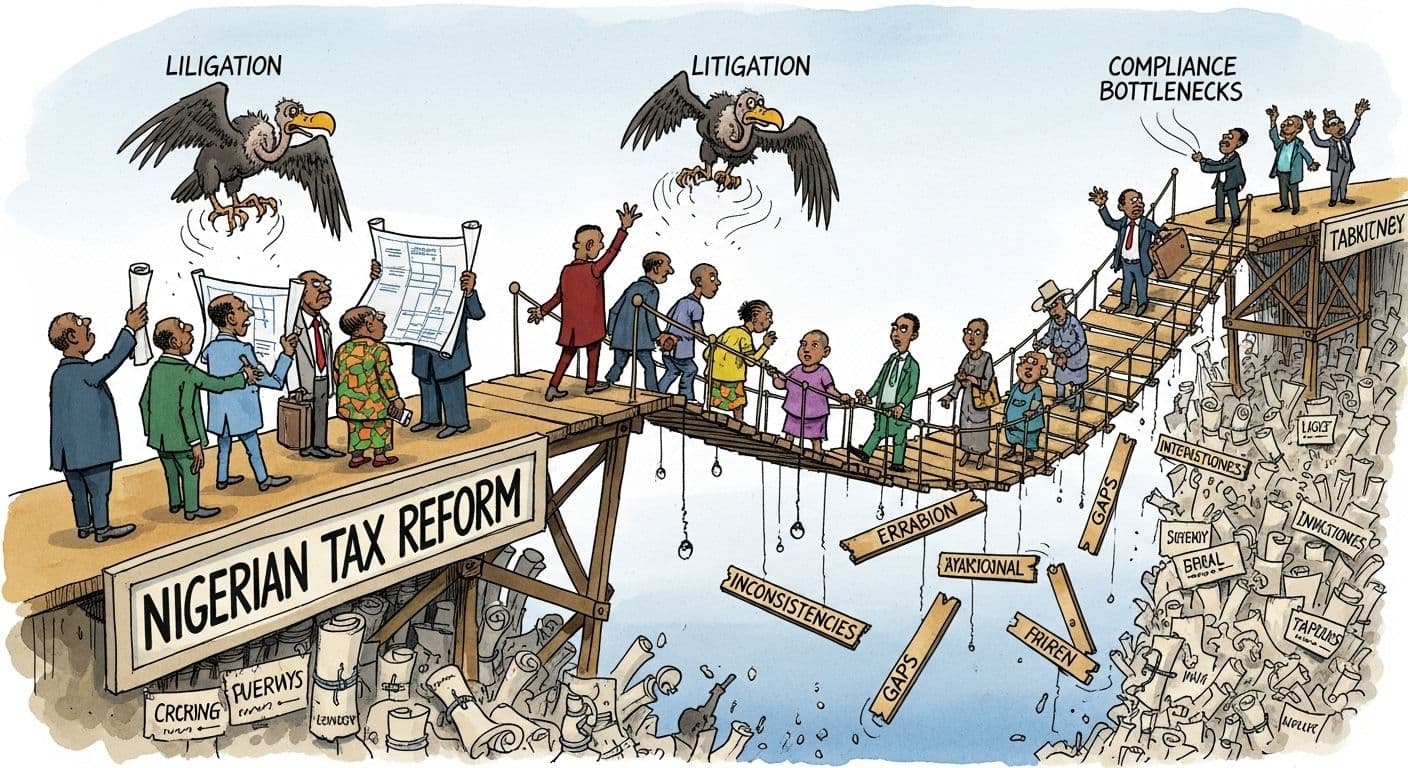
The tax landscape is starting 2026 at a sprint. New laws are taking effect on 1 January, regulators are fine-tuning guidance, and businesses are scrambling to line up systems before the first filings hit the calendar. From Africa’s most populous nation to Australia’s quiet back-office, tax teams face one shared truth: change.
This report tracks six developments that matter now. They cover sweeping statute books in Nigeria, minimum-tax rules in Australia, foreign-exchange warnings in South Korea, rising sector-specific levies in the U.K. and Indonesia, and a running debate between Abuja and KPMG. Together they sketch a heatmap of reform, resistance, and revenue hunger.
1. Nigeria’s Four-Act Overhaul: Promise Meets Drafting Chaos
The new Nigeria Tax Act 2025 (NTA), Nigeria Tax Administration Act 2025 (NTAA), Nigeria Revenue Service Establishment Act 2025 (NRSEA) and Joint Revenue Board Establishment Act 2025 (JRBEA) became law on New Year’s Day. The policy goal is clear, simplify a fragmented system, lift compliance, and widen the tax base, but the ink is still wet and critics are already circling.
A detailed legal review found 31 technical flaws ranging from missing definitions to conflicting cross-references, Proshare reports. Among the red flags:
“Communities” dropped from the charging section, raising equity concerns.
Foreign-exchange deduction caps that “threaten to confiscate capital rather than tax profit.”
A clash between the NTA and NTAA over non-resident VAT registration that could drive litigation and dent voluntary compliance.
Abuja Pushes Back
The Presidency’s Fiscal Policy and Tax Reforms Committee says critics,especially KPMG,have overstated the problem. In a statement shared on the presidential adviser’s X account, the committee insisted many “errors” reflect “misunderstanding of the policy intent.” Still, it conceded that some clerical glitches exist, as BusinessDay notes.
Translation: Government believes the bones are sound; consultants say the bones are cracked. Either way, taxpayers must navigate a statute book that may shift again once official corrigenda land.
2. ATO Hands Multinationals a Pillar Two Checklist
Australia will apply the OECD Global Anti-Base Erosion (GloBE) rules to income years starting 1 January 2024. That means the first Combined Global and Domestic Minimum Tax Return (CGDMTR) is due in 2026. To head off filing failures, the Australian Taxation Office (ATO) published fresh guidance on 9 January, Accounting Times reports. Key takeaways:
- Entity caps: Online services accept returns for up to 20 entities; digital service provider channels handle 300. Larger groups must contact the ATO for bespoke upload pathways.
- GloBE Information Return (GIR): Due 18 months after the first fiscal year and 15 months for later years. The first GIR window therefore closes 30 June 2026.
- Safe-harbour rules: Transitional relief exists but only if a group “demonstrates genuine attempts at compliance.”
The tone is soft today, but the subtext is steel: collect your data now or brace for penalties later.
3. Seoul’s FX Jitters Could Shape Tax and Trade
Currency risk rarely tops the tax director’s inbox. That may change in Seoul. Professor Kim Dae-jong of Sejong University told UPI that South Korea’s FX reserves sit at 22 % of GDP, far below Taiwan’s 80 %. He pegs the chance of a crisis at 30 % if reserves are not bolstered and calls for Korea-Japan currency swaps as insurance.
Why it matters for tax:
1. Emergency tax breaks,Seoul has a history of cutting duties and value-added tax during a currency crunch to fight imported inflation.
2. Transfer-pricing turbulence,rapid won depreciation skews comparable prices and distorts profit-split ratios.
3. Debt-push-down limits,thin-capitalisation rules may catch firms that refinance in dollars to hedge FX moves.
International groups with Korean affiliates should revisit models now, not after the won slides.
4. Flutter’s Global Footprint vs. U.K. Levy Hikes
Flutter Entertainment pulled in US$1.37 billion from its U.S. arm FanDuel in Q3, dwarfing earnings elsewhere. That geographic spread is a hedge against U.K. gambling-tax pressure, as SBC News notes. The company has already:
- Moved Sky Bet’s HQ to Malta, trimming the U.K. tax bill by £55 million a year.
- Backed the “Axe The Racing Tax” campaign.
- Snapped up Italy’s Snaitech, diversifying away from single-jurisdiction risk.
For tax planners, Flutter is a case study in location arbitrage. Expect other digital firms to copy-paste if the U.K. raises sector levies again.
5. Bali’s Tourism Tax: Plenty of Sun, Patchy Compliance
Indonesia’s bid to capture more tourist revenue via a 150,000 rupiah (≈ US$10) “Bali Levy” is only half-working. Just one in three international arrivals pays, KarryOn reveals.
Officials still recorded higher receipts because post-pandemic visitor numbers soared, masking a weak compliance rate. The island may tighten airport checks or bundle the levy into airline tickets, echoing schemes in Japan and Thailand.
Cross-border lesson: even micro-taxes need strong collection rails or revenue leaks fast.