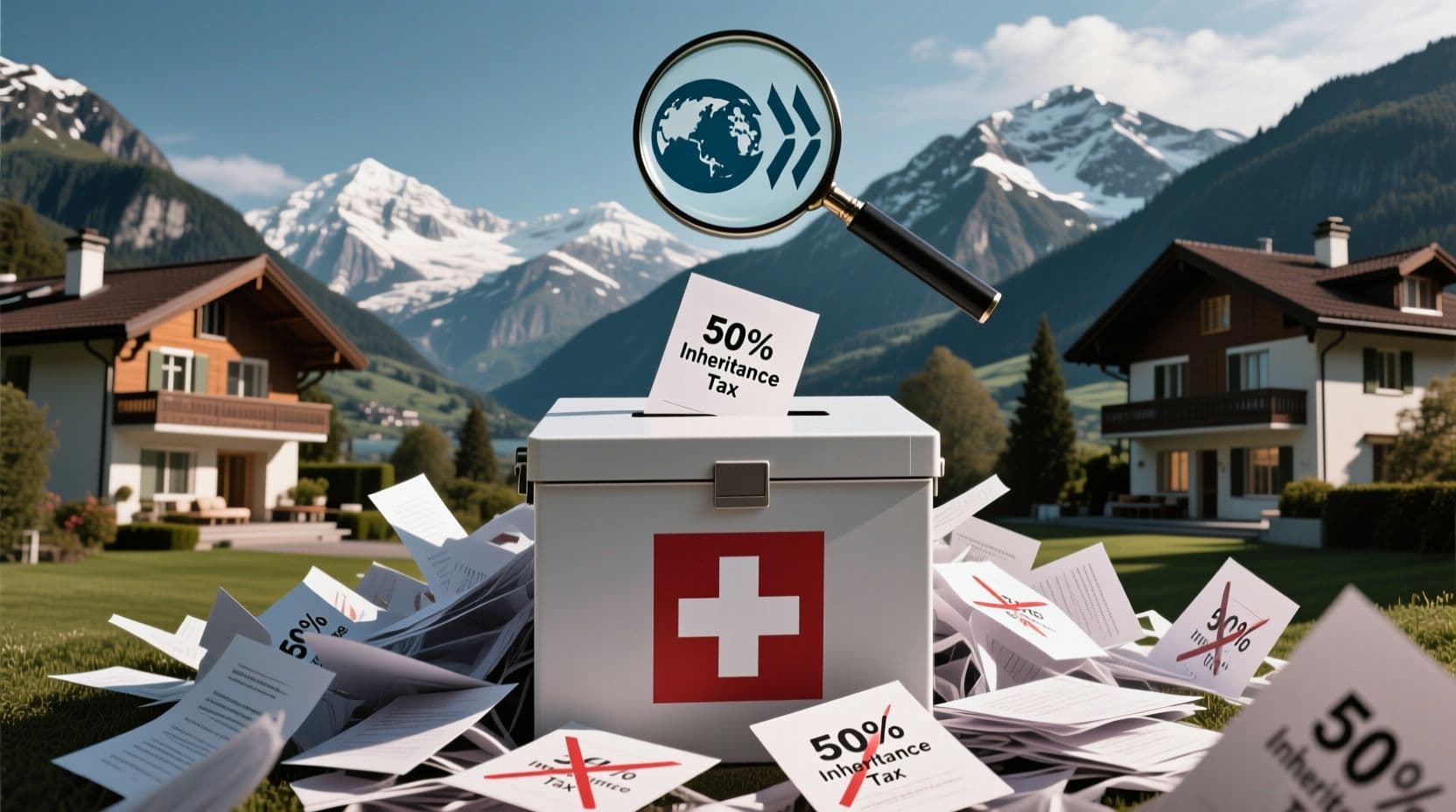
Swiss Wealth Tax Push Meets Alpine Avalanche
The mood in Bern was frosty this weekend after Switzerland’s electorate delivered a 78%-to-22% smack-down to a proposed 50% inheritance tax on estates above 50 million francs ($62 million), Bloomberg Tax reports. Proponents pitched the levy as a climate-funding bonanza that would touch just 0.03% of Swiss households. Voters weren’t buying it.
The referendum’s eye-popping rate gave critics an easy rallying cry. Business groups warned of billionaire flight, while family-owned firms claimed the measure threatened national competitiveness. The Swiss left, chastened by an even steeper loss than a similar 2015 effort, now faces a hard lesson: before you aim for the Matterhorn, you plant your flag on the foothills.
“Step one isn’t setting the ideal tax rate,” columnist Andrew Leahey wrote in Bloomberg, “it’s creating a precedent.” Translation: get something,anything,on the books, normalize it, then ratchet up later.
The reaction was swift across Europe. Tax reformers nodded knowingly; opponents pointed to the ballot box as proof that wealth taxes remain a political third rail. Expect version 3.0,likely slimmer and earmarked for a popular cause,to reappear on Swiss ballots before long.
Around the Tax World
• OECD cracks open the deeds drawer. Twenty-six jurisdictions signed the new Immovable Property information-exchange pact, extending automatic reporting rules from bank accounts to offshore real estate (Accounting Times).
• Crypto curtain call in South Africa. SARS will start enforcing the OECD’s Crypto-Asset Reporting Framework on 1 March 2026, bringing digital coins under the same disclosure regime as cash and shares (Swaziland News).
• Qatar + Uruguay = treaty harmony. The two nations inked a convention to eliminate double taxation, sweetening cross-border investment flows ( Qatar Tribune ).
Tax Stat of the Day
Prime Number: 26 , the count of countries that have agreed to swap offshore real-estate data under the OECD’s brand-new IPI MCAA.
Looking Ahead
All eyes shift to Paris, where the OECD will publish implementation timelines for the real-estate framework in early 2026. Reformers in Switzerland are already sketching a lower-rate, broader-base wealth-tax draft for the next election cycle.